

Last Updated on March 19, 2026
Table of Contents
When you’re handling intellectual property, you’re dealing with assets that are both high-value and high-risk. Patents, source code, design files, trade secrets, and clinical trial data don’t belong in traditional data rooms or shared folders.
You need a secure platform that keeps sensitive information protected while still allowing smooth collaboration during complex transactions like mergers and acquisitions, licensing deals, fundraising, and investor reviews.
This matters now more than ever. The virtual data room market is growing fast, from $2.35 billion in 2023 to $13.23 billion by 2032, driven by teams that need safer ways to store, review, and share sensitive data.
If you want to keep your IP secure and maintain control when multiple parties are involved, evaluating data rooms for IP management is one of the smartest steps before sharing any confidential information.
Best VDRs for IP-Heavy Use Cases
Choosing the right data room provider matters when you’re working with intellectual property. You need a secure platform that protects sensitive information, supports large technical files, and gives you full control over user permissions.
Below is a shortlist of top data room providers that match the Core Requirements Checklist from the previous section. These options offer strong data encryption, granular access controls, detailed audit trails, and the document management tools needed for complex transactions.
SmartRoom
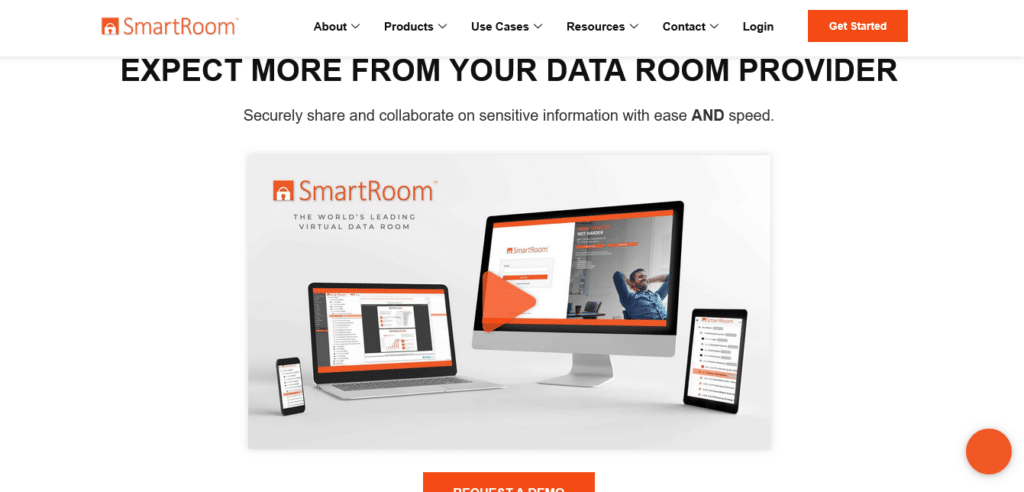
SmartRoom is a strong fit for companies handling sensitive IP documentation. It offers a secure environment, advanced data protection tools, and strong document organization features. Its clean interface makes it easy for legal teams, engineering teams, and investors to work together during the due diligence process.
Pros
- Robust security features with strong data encryption
- Granular user permissions for specific documents
- Fast performance for large data storage and technical files
- Good option for M&A, licensing, and multi-party IP deals
- Offers tools for document access control and real-time user tracking
Cons
- Pricing can be higher for smaller teams
- Fewer built-in analytics features compared to some competitors
Digify
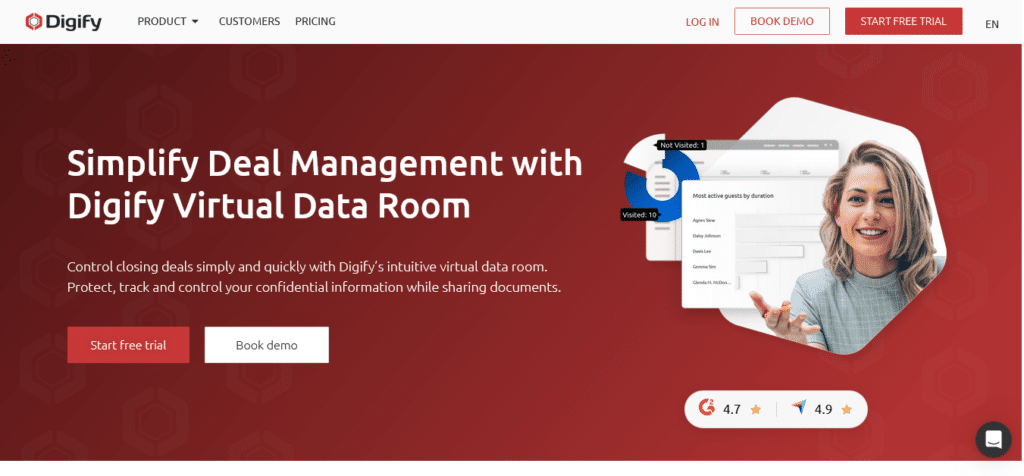
Digify is known for being simple, fast, and very secure — making it a great option if you need to set up an online data room quickly. It’s user-friendly and does not require extra hardware or plug-ins, which reduces setup time. Digify is also certified for ISO 27001, proving it meets global standards for information security.
Pros
- Very user-friendly interface (easy to learn, no complex training)
- Detailed document tracking: frequency, duration, location of access
- Granular access controls for each user or user group
- Dynamic watermarking for confidential documents
- ISO 27001 certified for enhanced security
- Good free trial option for small teams testing data room services
Cons
- Not as advanced for huge file volumes (e.g., massive codebases)
- Limited workflow automation for bigger M&A teams
FirmRoom
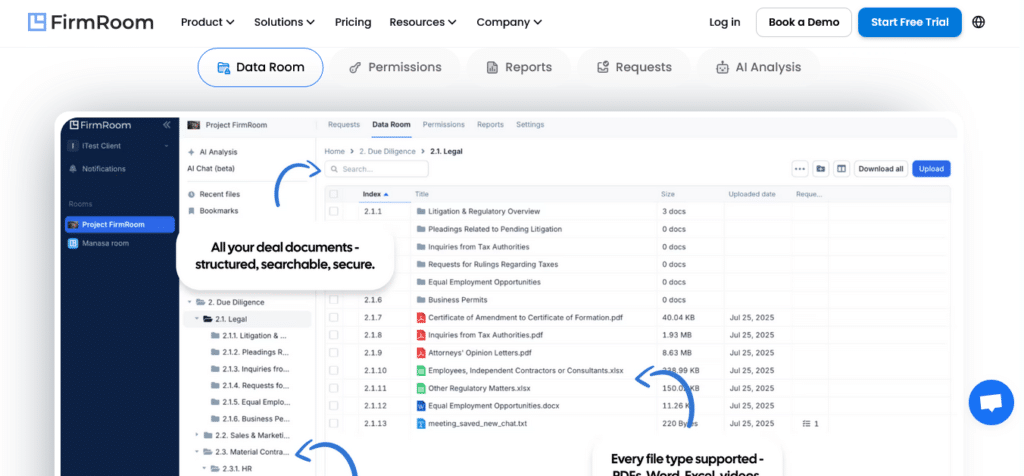
FirmRoom is trusted in investment banking, M&A, and IP-heavy transactions. It offers a mix of enhanced security, fast document management, and strong customer support. It also uses advanced encryption and two-factor authentication to protect sensitive information at all times.
Pros
- Advanced encryption + two-factor authentication
- Customizable permissions for granular access
- 24/7 customer support
- Easy drag and drop uploads for all the documents
- Version control so everyone works with the most current files
Cons
- Pricing is mid-to-high range
- May require onboarding for teams unfamiliar with VDRs
Datasite
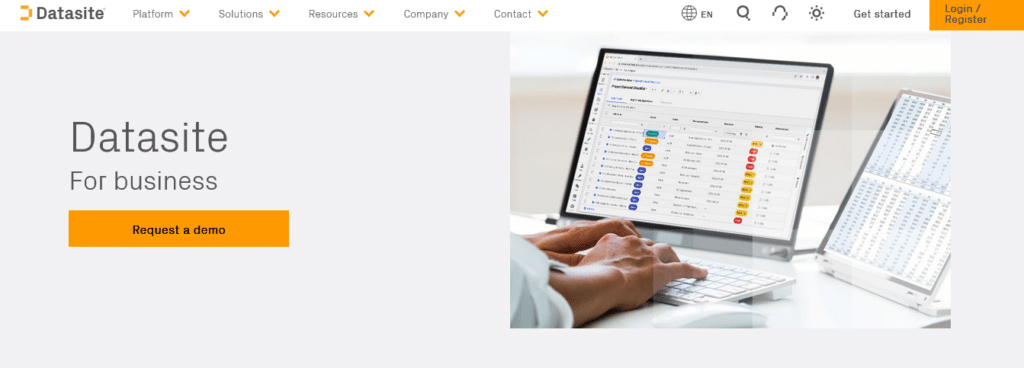
Datasite is a strong enterprise-level VDR often used for complex transactions and global deals. It offers powerful security features, real-time analytics, and strong support for large teams.
Pros
- Enterprise-grade security and encryption
- Great for global M&A and high-volume IP review
- Strong audit trails and user activity tracking
- Large storage capacity for technical files
Cons
- Higher cost
- Overkill for small IP licensing or early-stage startups
Intralinks
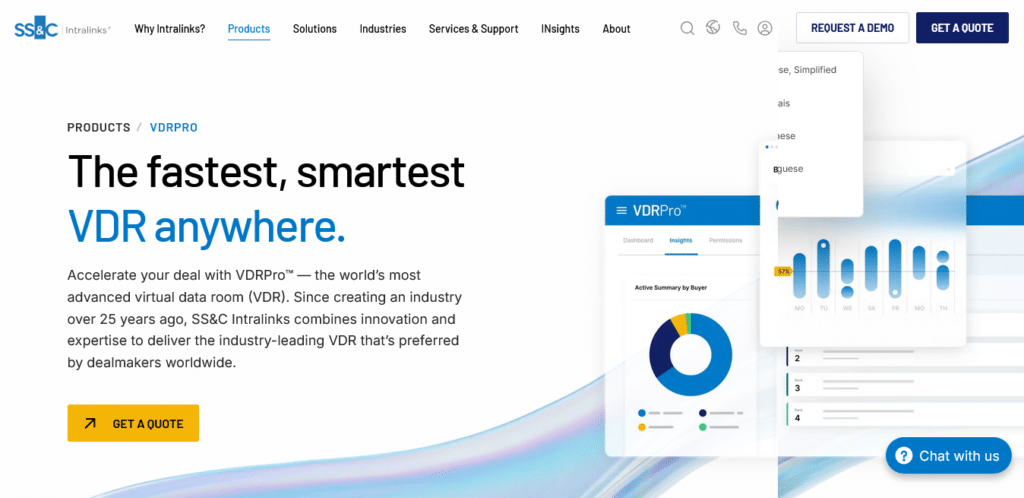
Intralinks is known for its strict security features and is heavily used in regulated industries. It’s a good choice if your IP includes clinical trial data, R&D materials, or anything requiring strict compliance.
Pros
- Excellent compliance tools (HIPAA, industry regulations)
- Strong access security and robust encryption
- Popular with pharmaceutical and biotech firms
- Detailed audit trails for each user
Cons
- Interface feels complex for new users
- Pricing is among the highest in the industry
Why Generic VDR Advice Often Falls Short for IP-Heavy Use Cases
Most virtual data room advice talks about sharing simple business files like financial statements, legal documents, or contracts. That works for small deals, but not when you’re managing intellectual property. IP materials, such as source code, trade secrets, R&D data, CAD drawings, or clinical trial data, carry higher risk and need stronger data security than what traditional data rooms usually cover.
The Missing Features You Actually Need
Standard guidance rarely explains how to protect sensitive information at the level required for IP. It often ignores key features like:
- Granular access controls
- Dynamic watermarking
- Encrypted files and strict data encryption
- Detailed audit trails
- Version control for fast-changing IP documents
- Secure access for large or technical files
When these needs are overlooked, your team may give too much access, lose track of user activity, or accidentally expose confidential data to unauthorized parties.
Why These Gaps Matter in IP Deals
IP-heavy transactions involve multiple parties, and you must maintain control at every step. Without the right access controls, robust security features, and audit logs, you risk leaks, compliance issues, or delays in the due diligence process.
This is why top data room providers now include advanced security features like multi-factor authentication, real-time audit trails, and end-to-end encryption. These tools help you protect confidential information, manage document access, and ensure your intellectual property stays secure from start to finish.
When to Use an IP-Optimized Data Room: Key Use Cases
Not every deal needs a data room built for intellectual property, but you do when you’re handling sensitive documents that could lose value or cause legal issues if they’re shared the wrong way. A secure platform with granular access, audit trails, and strong data encryption helps you maintain control while still moving your deal forward. Below are the most common situations where an IP-optimized virtual data room is the safer and smarter choice.
Mergers & Acquisitions for IP-Rich Companies
When you’re buying or selling a company with valuable IP, you must share:
- patents and filings
- source code
- R&D data
- trade secrets
- design files and CAD drawings
- operational documents
These deals often involve multiple parties, including potential investors, legal teams, and advisors. You need data security, robust access controls, and detailed audit trails so only authorized parties can review sensitive information. Using a data room here speeds up the due diligence process and helps protect confidential data during complex transactions.
Licensing Deals, Tech Transfers & R&D Partnerships
Licensing negotiations require sharing specific documents such as prototypes, technical specs, testing results, and trade-secret materials. A virtual deal room lets you control access permissions, track user activity, and use dynamic watermarking to prevent unauthorized sharing.
You also get real-time document tracking, which helps you understand interest and engagement levels from potential partners.
Fundraising for IP-Heavy Startups or Tech Firms
Investors often need to see:
- patents
- product designs
- IP documentation
- financial records
- cash flow statements
- operational documents
A secure online repository helps you organize all the documents and keep confidential information protected. This is especially useful when you’re dealing with multiple investors at once.
Patent, Trademark & Portfolio Audits
During audits, you must share IP documentation, ownership records, and compliance materials. A dedicated data room lets you maintain strict access security and track every document view. This reduces the risk of exposing confidential information and keeps your IP remains secure throughout the review period.
Litigation Support & Compliance Reviews
Legal cases often require controlled access to confidential documents, sensitive data, and historical IP files. Detailed audit trails and secure document sharing give you the transparency needed to support legal teams without risking leaks.
Long-Term IP Vaulting & Archival
If you manage long-term assets, such as legacy source code, expired patents, trade secrets, old clinical trial data, or engineering files, a VDR acts as a safe, structured storage system. You get strong data protection, encrypted files, and a secure environment where only authorized parties can access specific documents.
Core Requirements for an IP Data Room: Feature & Security Checklist
When you’re managing intellectual property, you can’t trust just any online data room. You need a data room for IP management that keeps sensitive information protected, controls external access, and gives you full visibility into who sees what. Below are the core requirements you should look for when choosing a virtual data room provider for IP-heavy workflows.
| Requirement | Why It Matters | Examples of Features |
| Granular access controls | Protects sensitive information by limiting who sees what | View-only, no-download, role-based access |
| Robust security | Prevents breaches and IP theft | Encryption, MFA, dynamic watermarking |
| Audit trails | Shows who accessed documents and when | Location tracking, duration, user logs |
| Technical file support | Handles large and complex IP files | CAD support, source code, version control |
| Document organization | Keeps all the documents easy to find | Automated indexing, drag and drop uploads |
| Compliance support | Helps meet industry and legal standards | ISO27001, HIPAA, data protection controls |
| Archival options | Secures IP long-term | Encrypted storage, controlled future access |
IP Due Diligence Best Practices & Workflow Guidance
A successful due diligence process starts with the way you prepare, organize, and protect your IP documentation. A virtual data room helps you manage sensitive information by giving you encrypted files, granular access controls, detailed audit trails, and a secure environment for all the documents you need to share. Below is a simple workflow that keeps your intellectual property safe while giving buyers, investors, or partners everything they need to complete their review.
Step 1: Inventory and Classify All IP Assets
Begin by gathering every relevant piece of intellectual property, from patents and trademarks to source code, CAD drawings, clinical trial data, and trade secrets. Keeping these files scattered across email, internal drives, or shared folders slows down your diligence process and creates unnecessary security risks. Uploading everything to the data room lets you store all the documents in one organized location where they can be indexed, searched, and reviewed securely.
Step 2: Review for Privilege and Confidentiality
Before placing anything into the data room, examine each file to identify confidential information that needs added protection. Look for privileged legal documents, sensitive R&D reports, and trade-secret materials that require special access settings.
At this stage, you may also decide which documents should be shared immediately and which should only be shown later in the due diligence process.
Step 3: Redact, Clean Metadata, and Prepare Files
After reviewing your documents, prepare them for sharing. Many files contain hidden metadata or comments that should not be disclosed. Some may require redaction, especially if they include personal information or sensitive partner details.
If the files are highly confidential, particularly code, formulas, or internal models, convert them to safer formats or use encrypted versions before uploading.
Step 4: Build a Clean Folder Structure and Naming System
A clear folder structure is one of the easiest ways to speed up the diligence process. Use folders that match the major sections of your deal, such as:
- Patents & Trademarks
- Source Code & Engineering Files
- R&D & Trade Secrets
- Licensing & Agreements
- Financial Statements
- Compliance & Audit Materials
Virtual data rooms support drag and drop uploads and version control, so it’s easy to keep the most current documentation available without causing confusion during review.
Step 5: Map User Permissions and Set Access Controls
Once your structure is set, assign granular access controls to each user group. Internal teams usually receive full access, while investors, buyers, legal advisors, and external partners should only see specific documents. You can use:
- view-only permissions
- no-download or no-export settings
- dynamic watermarking
- multi-factor authentication
- time-limited links
These settings help you control access while keeping sensitive information secure throughout the due diligence process.
Step 6: Upload Documents and Apply Security Features
Upload your files and activate the data room’s security tools. This includes data encryption, detailed audit trails, and dynamic watermarking. These features ensure that only authorized parties can open, view, or interact with the documents. They also help you maintain compliance and protect your intellectual property during the review.
Step 7: Monitor User Activity and Manage Q&A
As users start reviewing the data room, pay attention to the activity logs. Virtual data rooms track who viewed each file, how long they viewed it, and where the access came from. Digify, for example, records frequency, duration, and location of access, giving you valuable insight into which documents are generating the most interest. Keep all Q&A inside the platform so every question, answer, and follow-up stays protected and easy to reference.
Step 8: Revoke Access and Archive After the Deal
After the transaction ends, remove all external access, lock down the data room, and archive your files. This protects sensitive data long-term and gives you a complete record of all user activity for compliance, audits, and future reference. Keeping an organized, encrypted archive also simplifies future deals or follow-up diligence.
Frequently Asked Questions
1. What is The Best Data Room For IP Management?
The best data room for IP management is one that offers strong data security, granular access controls, dynamic watermarking, detailed audit trails, and support for large technical files. SmartRoom, Digify, and FirmRoom are top choices because they protect sensitive information, streamline the due diligence process, and make it easy to manage confidential IP documents in a secure online repository.
2. How Do Virtual Data Rooms Protect Sensitive IP Documents?
Virtual data rooms protect sensitive IP documents using data encryption, multi-factor authentication, granular access controls, and robust security features like dynamic watermarking and audit trails. These tools control who can view, download, or share confidential information while keeping detailed records of all user activity to prevent leaks or unauthorized access.
3. What Documents Should I Include in A Data Room For An IP-heavy Deal?
An IP-focused data room should include patents, source code, R&D reports, trade secrets, technical drawings, licensing agreements, compliance records, financial statements, and any legal documents related to ownership or rights. Keeping all the documents in a secure environment with organized folders and clear access permissions helps ensure a smooth and safe due diligence process.
Conclusion
A virtual data room built for IP management helps you protect sensitive information and stay organized during complex transactions. When you rely on strong security features such as data encryption, granular access controls, dynamic watermarking, and multi-factor authentication, you can control document access and keep your confidential information safe. This is especially important when you’re sharing patents, source code, R&D data, financial statements, and legal documents with multiple parties during the due diligence process.
Using a secure online repository also makes IP work faster and more reliable. Instead of tracking files across email or shared drives, all the documents stay in one place with clear version control and detailed audit trails. You always know who viewed what, how long they viewed it, and which documents are getting attention. This makes it easier for you to manage external access, maintain compliance, and keep your IP documentation accurate throughout the deal.
To move forward, focus on a simple plan: gather and prepare your IP files, choose a data room provider with robust security features, organize your folders, set clear user permissions, and monitor activity until the deal closes. After reviewing is complete, revoke external access and archive everything securely. These steps help you maintain control of your intellectual property from start to finish and protect your business during any transaction that involves sensitive data.

Matthew Small is the Vice President of Strategic Sales and Alliances at SmartRoom, where he builds partnerships and leads strategic efforts to deliver cutting-edge virtual data room solutions for dealmakers. With a strong background in enterprise sales and channel development, Matthew is passionate about unlocking new growth opportunities and helping clients navigate complex transactions with greater speed, security, and confidence.