
Last Updated on July 22, 2026
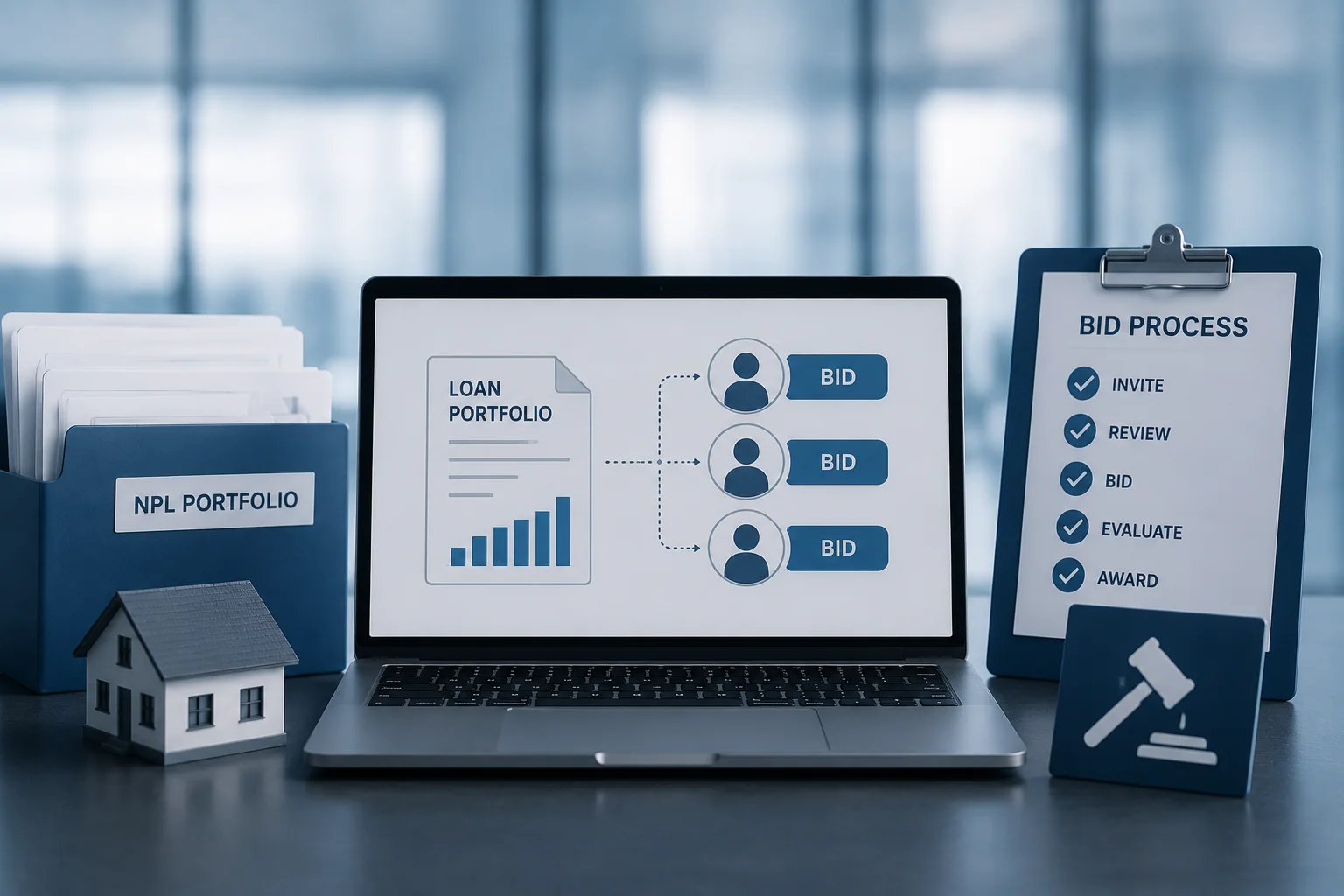
NPL loan-sale collaboration is the coordinated, multi-party process of running a competitive sale of a non-performing loan portfolio, managing the seller’s advisors, servicers, and several rival bidders through a structured, time-boxed bid process.
Because competition is what maximizes the sale price, the goal is to give every qualified bidder equal, well-organized access to the data while keeping rivals separated and the process auditable.
Key takeaways
- NPL sales are usually competitive auctions, because competition among bidders is the main driver of price.
- A process letter sets the timeline, phases, data-room rules, and required offer form for all bidders.
- Bidding typically runs in rounds: indicative offers, shortlisting, confirmatory diligence, then binding bids.
- Rival bidders must be scoped separately, yet treated to equal information for a fair process.
- Structured Q&A, document-level access, and a complete audit trail keep the process organized and defensible.
What is the NPL loan sale process?
The NPL loan sale process is the structured, competitive method by which a seller markets a non-performing loan portfolio to multiple prospective buyers and runs them through due diligence and bidding to a close.
Most distressed sales are run as auctions rather than single bilateral deals, because a competitive field pushes bidders to price closer to their true valuation and maximizes the seller’s proceeds.
Running that competition well is fundamentally a coordination problem: many parties, large datasets, tight timelines, and the need to treat rival bidders fairly while keeping them apart. The data room is the shared environment where that coordination happens.
Who collaborates in an NPL loan sale?
An NPL loan sale brings together several parties on the sell side and a field of competing buyers, all working through the same process. On the sell side are the selling institution, its financial advisors or sale agents, servicers who hold loan data and history, and legal counsel.
On the buy side are multiple rival bidders, debt funds, distressed-asset managers, hedge funds, private equity firms, and specialty servicers, each with their own deal and diligence teams.
The coordination challenge is that these groups need very different access. Advisors and the seller need a full view and control; servicers contribute data; each bidder needs a complete view of the portfolio but no visibility into rivals. Designing that access map up front is the foundation of a clean process.
How does the process letter govern the sale?
The process letter governs the sale by setting out the rules of the auction for every bidder in writing. Issued by the seller or its agents to prospective bidders, it typically specifies the timeline and phases of the bid process, how the virtual data room operates, and the transfer mechanics, along with the required content and form of any offer, and often the form of the loan sale agreement itself.
By fixing these terms in advance, the process letter keeps all bidders on the same schedule and the same basis of comparison, which both protects fairness and makes competing offers easy to evaluate. The data room is then operated in line with the process letter’s phases and access rules.
How does a competitive bid process work, round by round?
A competitive NPL bid process generally works in rounds, narrowing the field as bidders commit more diligence. A typical sequence:
- Access and review. Qualified bidders enter the data room under confidentiality terms and begin diligence on the loan tape and supporting files.
- Indicative (non-binding) bids. Bidders submit preliminary, non-binding pricing based on initial review.
- Shortlisting. The seller selects a shorter list of bidders to proceed.
- Confirmatory diligence. Shortlisted bidders conduct deeper review, often with expanded access and a focused Q&A period.
- Binding bids. Final, binding offers are submitted in the prescribed form.
- Selection and close. The seller selects a winner, finalizes the loan sale agreement, and closes.
Access can be opened in stages across these rounds, so bidders see more detail as they advance.
How are bidder questions managed at scale?
Bidder questions are managed at scale through structured Q&A inside the data room, which routes each question to the right responder, records the exchange, and keeps the process organized.
With several bidders asking questions at once during diligence, an unstructured approach, scattered emails, quickly becomes unmanageable and risks inconsistent answers.
Structured Q&A also supports fairness: the seller can manage which answers are shared and ensure bidders are working from consistent information, while preserving a complete record of what was asked and answered.
How do you keep competing bidders separate and the process fair?
You keep competing bidders separate and the process fair through document-level, role-based access combined with a complete audit trail. Each bidder is scoped to its own access so rivals cannot see one another, their activity, or their questions, while the seller retains full visibility and a logged record of who viewed what and when.
Fairness comes from pairing that separation with equal information: each qualified bidder receives the same portfolio data and consistent answers, so the eventual outcome reflects genuine competition on a level playing field rather than uneven access. The audit trail makes the process defensible if any bidder later questions it.
How do real-time analytics inform the seller?
Real-time analytics inform the seller by showing how engaged each bidder is during diligence. Activity tracking reveals who is actively reviewing the data room, which materials draw the most attention, and which bidders may be losing interest, signals the seller and its advisors can use to manage the process and gauge competitive tension.
This visibility helps the sell side make better decisions about shortlisting, timing, and where to focus. Sellers can use this activity data to prioritize the most serious buyers and maintain competitive tension, turning the data room from a passive repository into a source of process intelligence.
NPL loan-sale collaboration best practices
Apply these practices to run a clean, competitive NPL sale:
- Map access before launch: define sell-side, servicer, and per-bidder access up front.
- Codify the rules in a process letter: fix the timeline, phases, offer form, and data-room rules.
- Run the process in rounds: narrow from indicative to binding bids with staged access.
- Use structured Q&A: route, record, and manage answers for consistency and fairness.
- Separate rivals, equalize information: scope each bidder while giving all the same data.
- Track engagement: use analytics to read competitive tension and manage the field.
- Keep a complete audit trail: log all activity to keep the process defensible.
Frequently asked questions
What is the NPL loan sale process?
The NPL loan sale process is the structured, competitive method of selling a non-performing loan portfolio to multiple buyers through due diligence and bidding. It is usually run as an auction, because competition among bidders is the main driver of the final sale price.
What is a process letter in an NPL sale?
A process letter is the document the seller issues to bidders setting out the rules of the sale: the timeline and phases of the bid process, how the data room operates, the transfer mechanics, the required form of any offer, and often the form of the loan sale agreement. It keeps all bidders on a common basis.
How are competing bidders kept apart in a loan sale?
Competing bidders are kept apart through document-level, role-based access that scopes each bidder to its own view, so rivals cannot see one another or each other’s activity. The seller retains full visibility and a complete audit trail of all access.
How does bidder Q&A work in an NPL sale?
Bidder Q&A is handled through structured tools in the data room that route questions to the right responders, record every exchange, and let the seller manage information consistently across bidders, keeping a high-volume, multi-bidder process organized and fair.
Why are NPL sales run as auctions?
NPL sales are typically run as competitive auctions because a field of rival bidders pushes pricing closer to true valuation, maximizing the seller’s proceeds. A structured, fair process with equal information is what sustains that competitive tension.

Matthew Small is the Vice President of Strategic Sales and Alliances at SmartRoom, where he builds partnerships and leads strategic efforts to deliver cutting-edge virtual data room solutions for dealmakers. With a strong background in enterprise sales and channel development, Matthew is passionate about unlocking new growth opportunities and helping clients navigate complex transactions with greater speed, security, and confidence.